
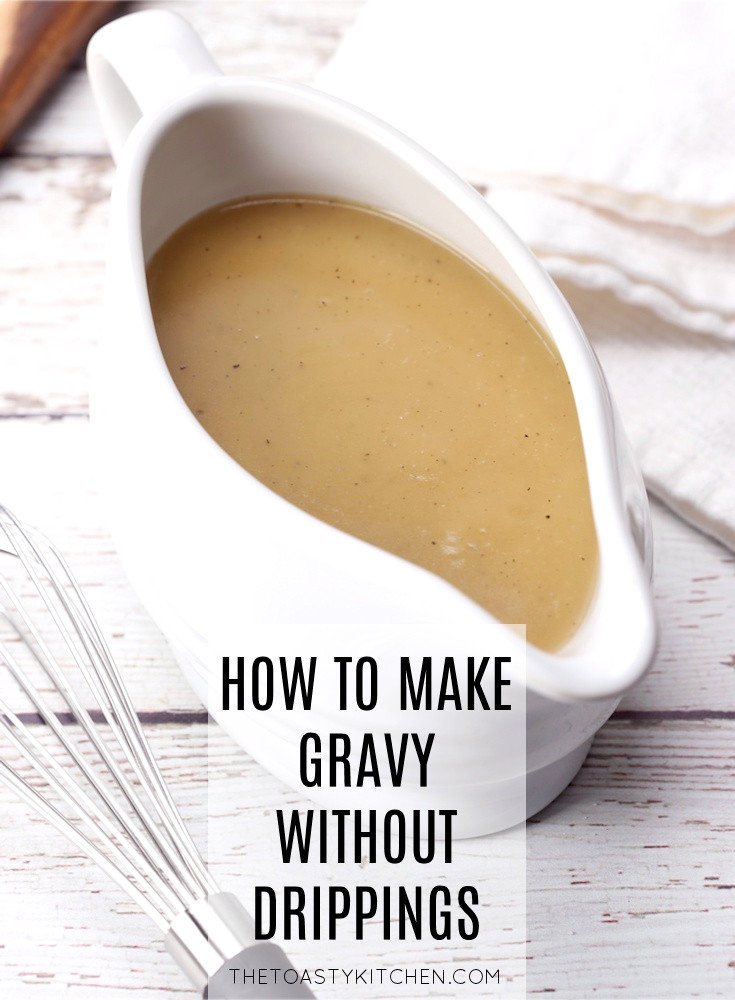
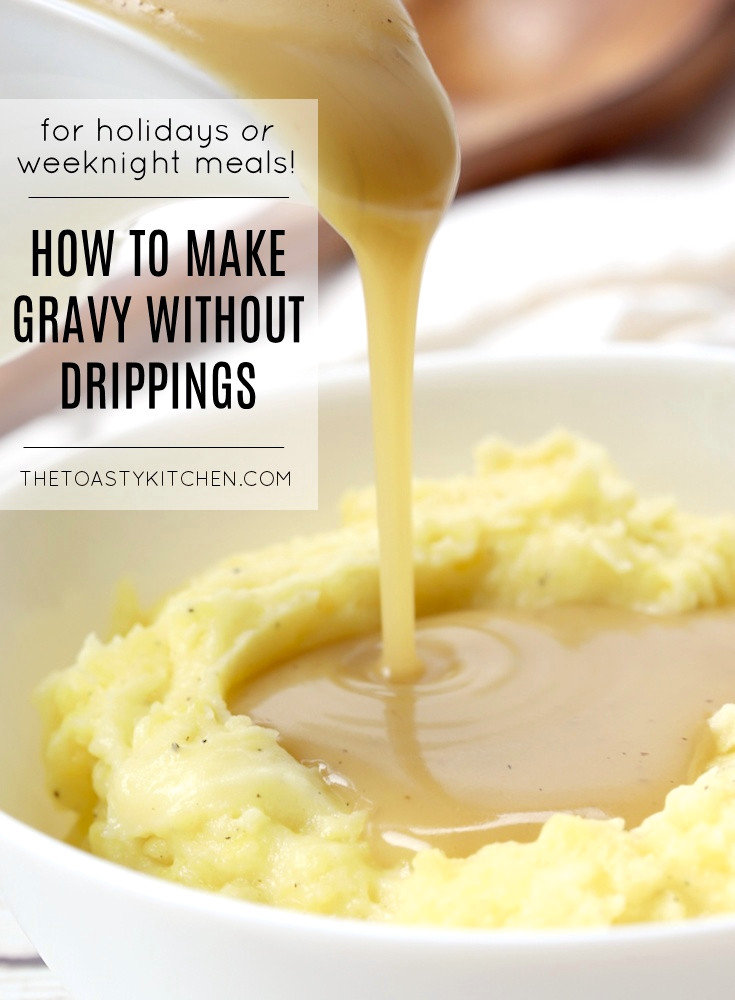
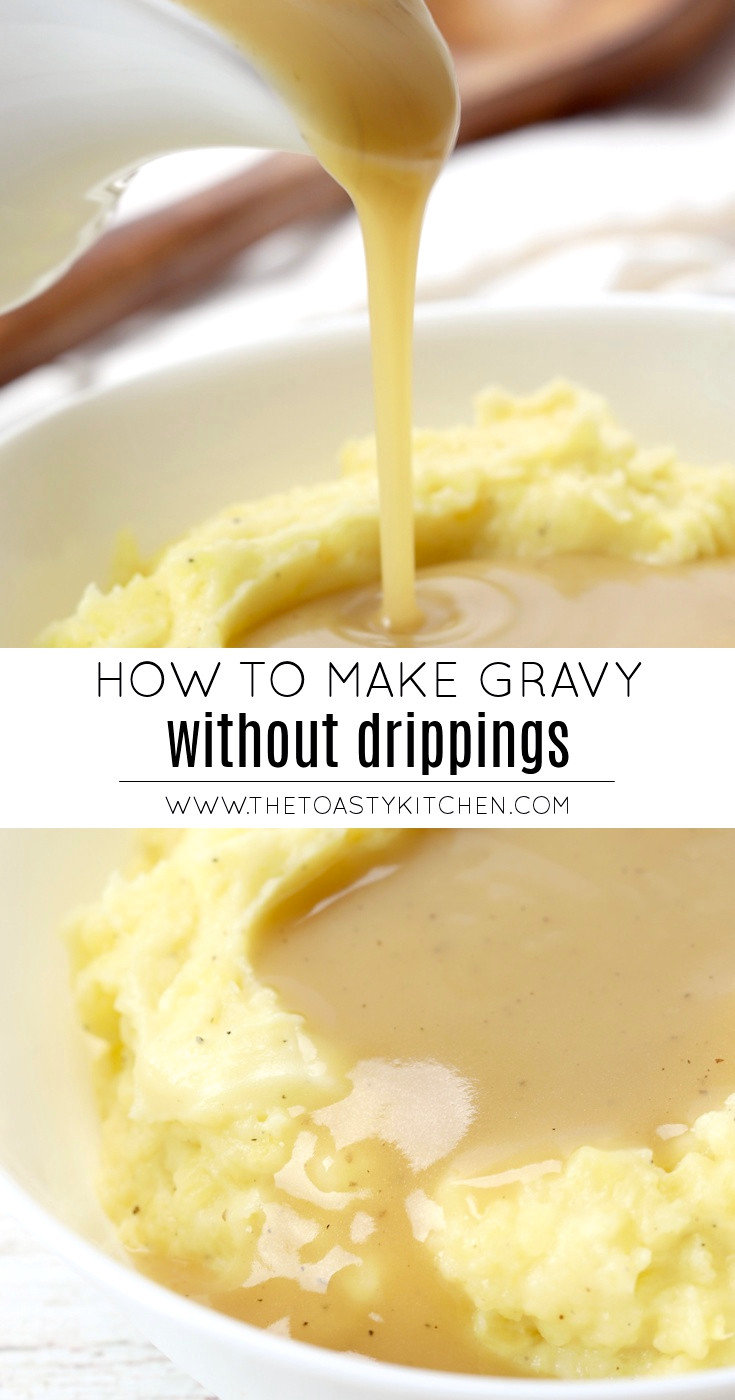
Learn how to make gravy without drippings today. This easy homemade gravy recipe makes a perfect batch of gravy every time, with a handful of simple ingredients. Perfect for holidays like Thanksgiving and Christmas.
Absolutely delicious gravy! I didn’t know gravy could taste so good without drippings. It was full of flavor, creamy and easy to make. Thanks for sharing this recipe, I’ll definitely be using it again! ★★★★★ - Rachel
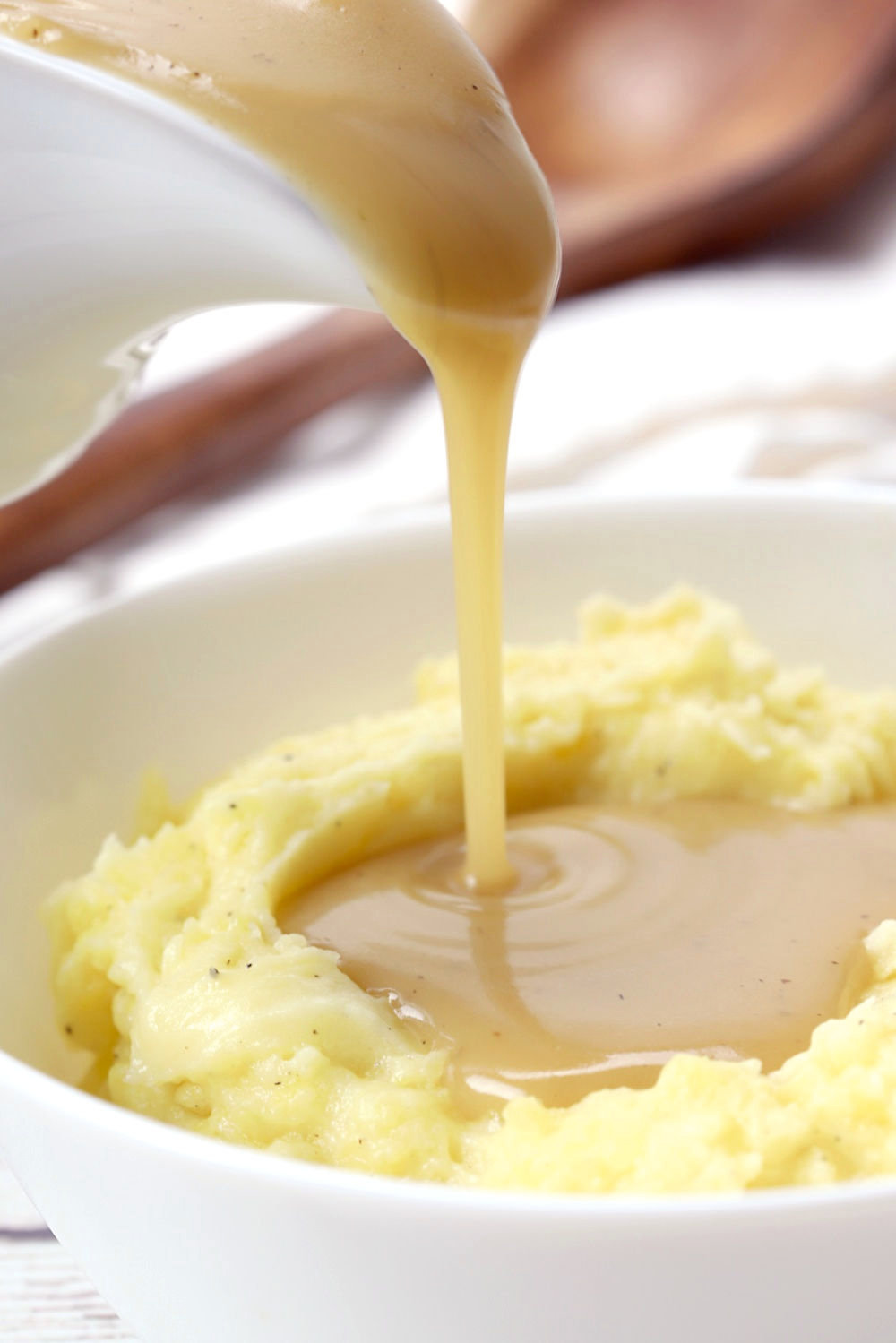
Heather's recipe summary
Flavor: Savory, mild, and easy to pair with your favorite protein.
You don't need drippings to make gravy. Maybe you're deep frying a turkey this year or want to make gravy the day beforehand. Either way, gravy is easy to make without turkey drippings!
Easy to customize. Make gravy with beef, chicken, pork, or turkey broth.
Similar to: Spicy Cajun Gravy or Creamy Mushroom Sauce
Jump to:
Ingredients and substitutions
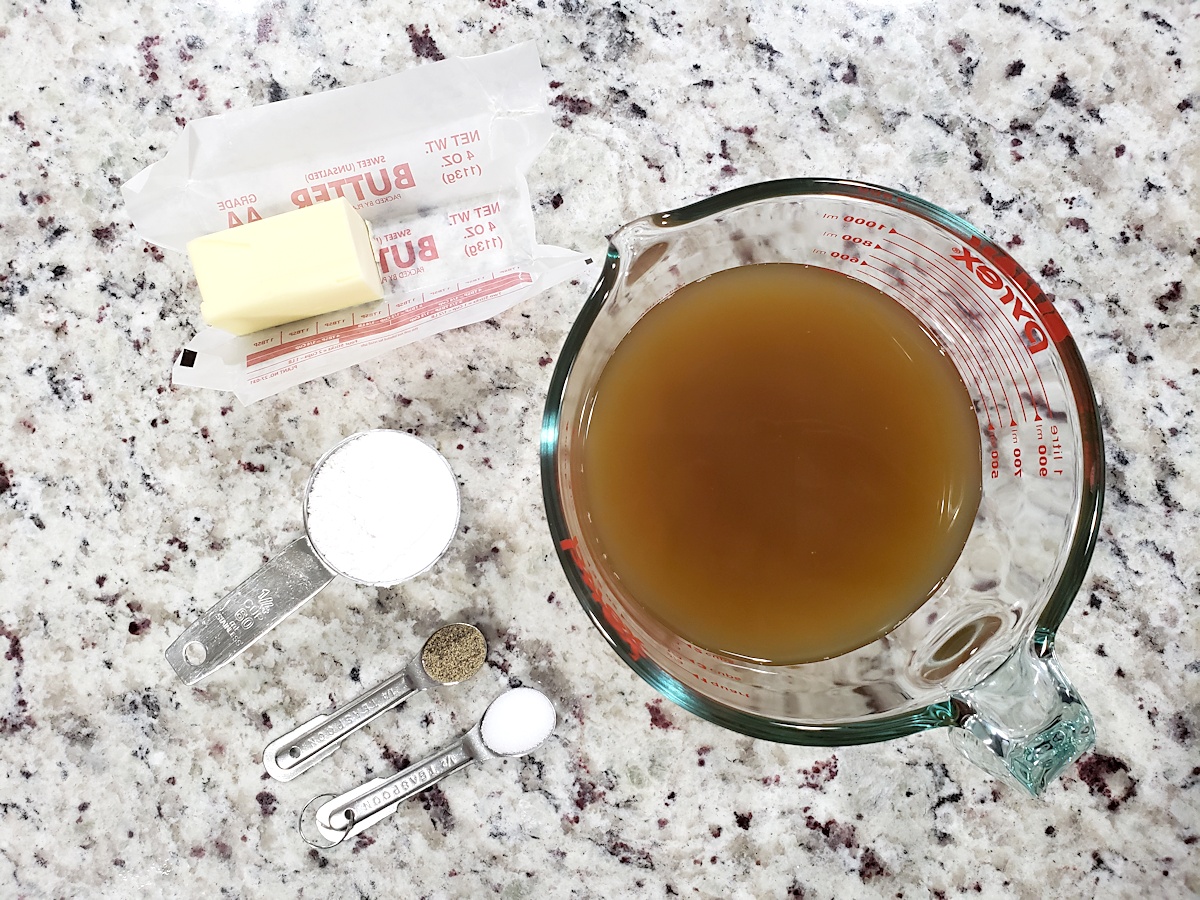
- Broth or stock - any flavor of broth or stock will work in this recipe. Chicken, turkey, beef, pork, or vegetable broth will all work great. If you're using low sodium broth, you may want to add additional seasoning, like a dash of poultry seasoning, dried sage, or dried thyme (assuming you're steering clear of added salt). Or try my Thanksgiving gravy variation included in the recipe card.
- Butter - Unsalted butter and salt can be substituted with salted butter.
- Flour - Necessary to make a roux. This is what thickens your gravy. Be sure to whisk well to get rid of any lumps.
- Additional seasoning - A basic gravy is seasoned with salt and pepper. Additional seasoning that works well in gravy: dried thyme, dried sage, Italian seasoning, or poultry seasoning. Try adding a pinch at a time and taste testing to find the perfect flavor for you.
How to make gravy
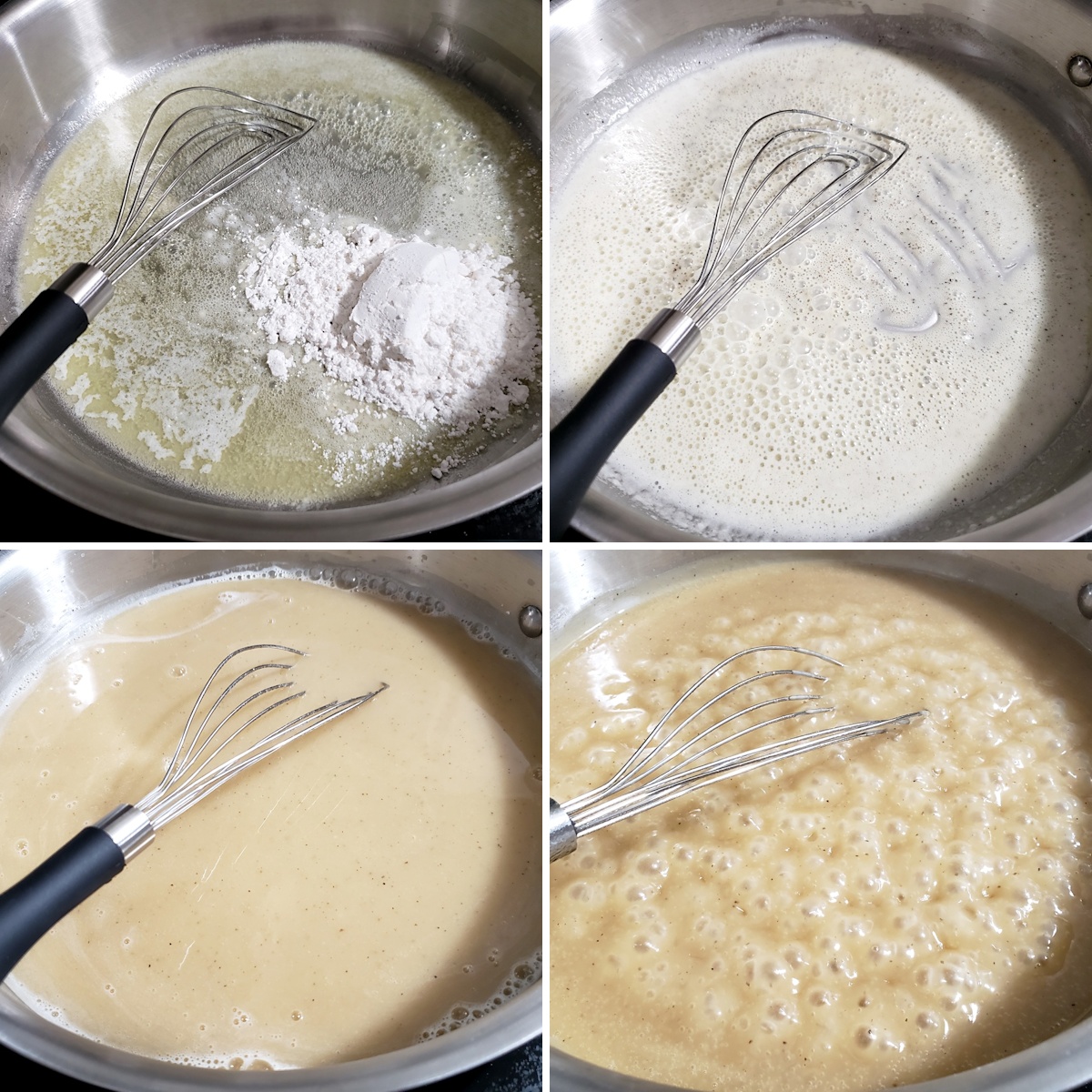
- In a pan over medium heat, melt butter. Add flour and whisk to combine, creating a roux. A roux is equal parts butter and flour and is used to thicken gravies, sauces, and soups.
- Allow the roux to cook for one minute.
- Add broth and whisk to combine.
- Bring to a simmer and whisk frequently until gravy has thickened to your liking.
Heather's top tip
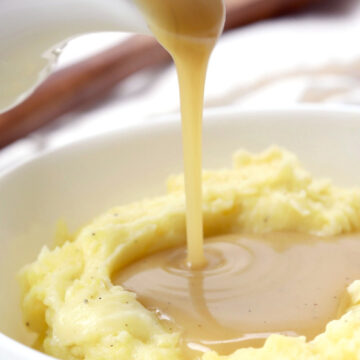
Whisking is an extremely important step in making a good gravy. This ensures your gravy remains smooth and lump free. My favorite whisks: OXO flat whisk (shown above) or OXO balloon whisk.
Tips and tricks
Making your gravy - To make a gravy, slowly add broth to the roux, whisking constantly. This ensures that your gravy does not get lumpy. Your gravy will look thin at this point - this is normal. Cook the gravy until desired thickness is achieved. The longer you cook your gravy, the thicker it becomes.
Pan too hot? - If your gravy feels like it's sticking to the bottom of the pan, turn the heat down slightly - your pan is too hot. Continuous whisking also helps to prevent gravy from sticking to the pan.
Salt last - I like to leave the salt for last for two reasons. Your broth or stock likely already contains some sodium. Also, everyone has a different taste for salt, so I'd like for you to season it to suit your tastes. You're the one enjoying this homemade gravy, after all. Remove the gravy from the heat and do a taste test. If it needs more salt, add more until you are happy with the taste.
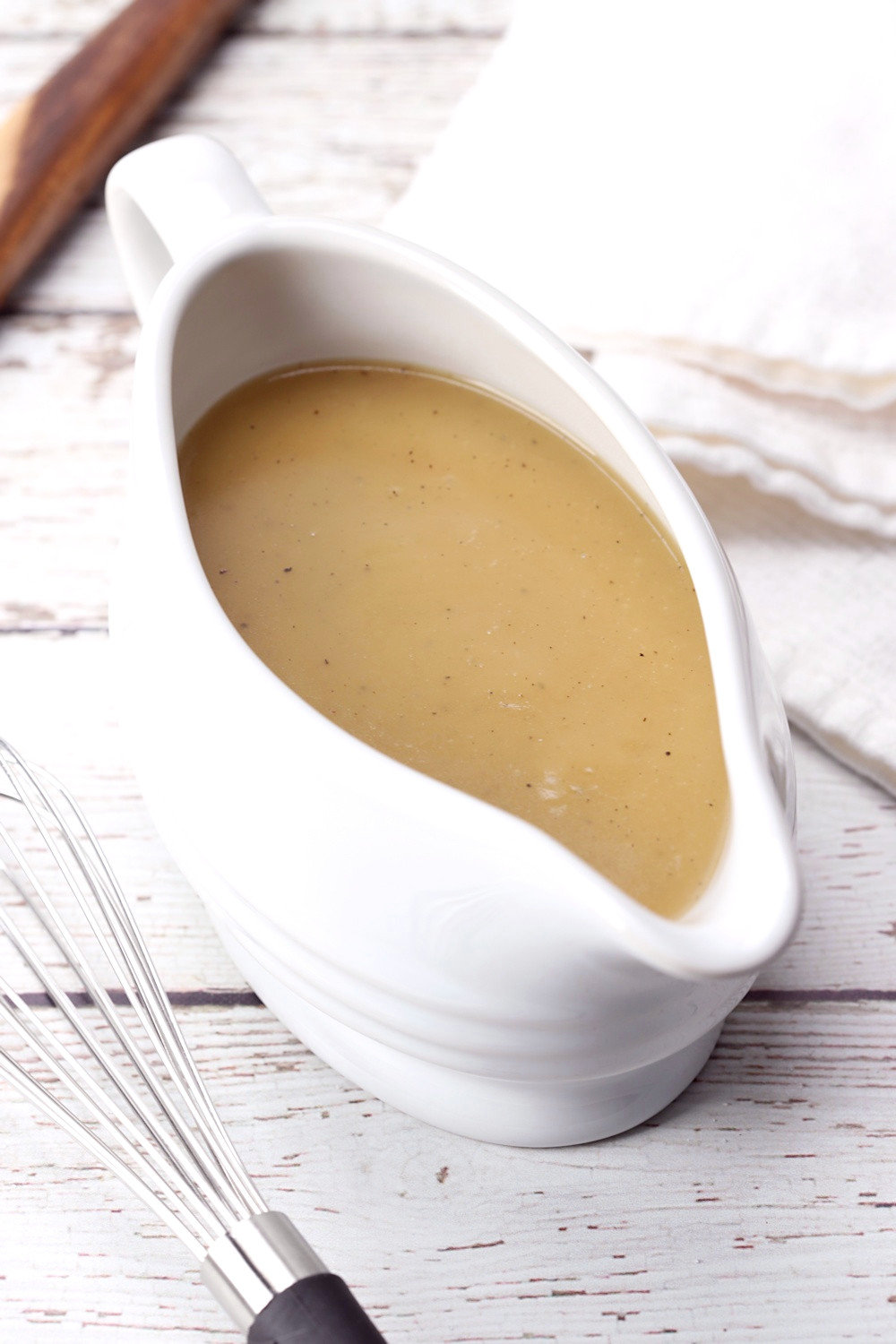
Use a gravy boat - Shown in the photos is a Le Creuset 12 ounce Gravy Boat in White, which fits one batch of gravy perfectly.
Storage
Homemade gravy will keep for 3-4 days in a tightly sealed container in the refrigerator or up to 3 months in the freezer. Transfer frozen gravy to the refrigerator to thaw overnight.
Gravy can be reheated on the stovetop in a saucepan over medium to medium-low heat. Add a splash of water as needed to thin the gravy to your preferred thickness.
Frequently asked questions
Drippings are the fat that has dripped off of your meat while cooking. If you're making gravy for your Thanksgiving turkey, for example, you'd reserve the fat and juices that collect in the bottom of the pan while your turkey roasts. After allowing the fat and juices to separate, you'd then use a portion of the fat (instead of butter that we use in this recipe), and the juices (instead of, or in addition to, a stock or broth), to make your gravy.
To prevent lumps in gravy, use a whisk to slowly incorporate the broth with the roux. If your finished gravy still has lumps, pour it through a fine mesh sieve before serving.
A serving of gravy ranges between ⅓ to ½ cup. For a hearty dinner like Thanksgiving, I recommend erring on the side of caution and preparing about ½ cup of gravy per person. This recipe can easily be adjusted to make more gravy as needed. Keep in mind that doubling or tripling this recipe may require longer cooking time.
Yes, your gravy can be made up to 3 days ahead of time and stored in the refrigerator. You can also freeze gravy for up to three months in a tightly sealed, freezer-safe container. Leave at least an inch of space at the top when freezing liquids because they expand when frozen. If frozen, transfer your gravy from the freezer to the refrigerator the night beforehand to thaw.
Pour your gravy into a saucepan and warm over medium heat. Whisk until warmed through. You may need to add a small amount of water to thin your gravy as it continues to thicken as it steams. Adding more broth or stock adds more sodium to your already seasoned gravy, which is why I suggest adding water instead. Otherwise, you may end up with an over-seasoned, salty gravy.
This recipe makes about 2 cups of gravy, which can feed 4 to 6 people. For Thanksgiving, I'd recommend preparing about ½ cup of gravy per person.
Recommended
📖 Recipe
How To Make Gravy Without Drippings
Ingredients
Basic gravy
- ¼ cup (56 g) unsalted butter
- ¼ cup (30 g) all-purpose flour
- 16 ounces (453 g) broth, chicken, turkey, or vegetable
- ¼ teaspoon pepper
- ½ teaspoon salt, to taste
Thanksgiving gravy (optional additions)
- ½ small onion, minced
- 2 cloves garlic, minced
- 1 teaspoon poultry seasoning
Instructions
Basic gravy
- In a saucepan over medium heat, melt butter.
- Whisk in flour until no lumps remain. Cook for one minute.
- Slowly add broth to pan, whisking to incorporate. Add pepper and whisk to incorporate. Bring to a simmer and cook, whisking frequently, for about 5-7 minutes, or until desired thickness is achieved.
- Remove pan from heat and season with salt to taste.
Thanksgiving gravy
- In a saucepan over medium heat, melt butter. Add minced onion and cook until softened and lightly browned, about 2-3 minutes. Add garlic and cook an additional 30 seconds.
- Whisk in flour until no lumps remain. Cook for one minute.
- Slowly add broth to pan, whisking continuously. Add poultry seasoning and pepper, whisking to incorporate. Bring to a simmer and cook, whisking frequently, for about 5-7 minutes, or until desired thickness is achieved.
- Remove pan from heat and season with salt to taste.
Equipment Recommendations
Notes
- Yield: 2 cups of prepared gravy
- Make ahead: Gravy can be made up to 3 days ahead of time and stored in the refrigerator, or frozen for up to 3 months. If frozen, transfer your gravy from the freezer to the refrigerator the night before serving to thaw.
- Reheating: Pour gravy into a saucepan and warm over medium heat. Whisk until warmed through. Add water as needed if gravy is too thick.
- Variations: Chicken broth can be substituted with any type of broth you have on hand, like turkey, beef, pork, or vegetable broth.
- Serving size: How much gravy do you need per person? Plan to prepare between ⅓ to ½ cup of gravy per person, erring on the higher end for holidays like Thanksgiving.
- When doubling/tripling: Gravy will take longer to cook and thicken. Watch the consistency of your gravy rather than the time.


Excellent gravy!!!
Thank you for sharing this recipe